
What Does a Live Event Production Crew Actually Do on the Day?
The question we hear most from organisers is what happens between doors opening and the final fade. Helen Marsh walks through the crew roles, the run-of-show and the decisions made live.
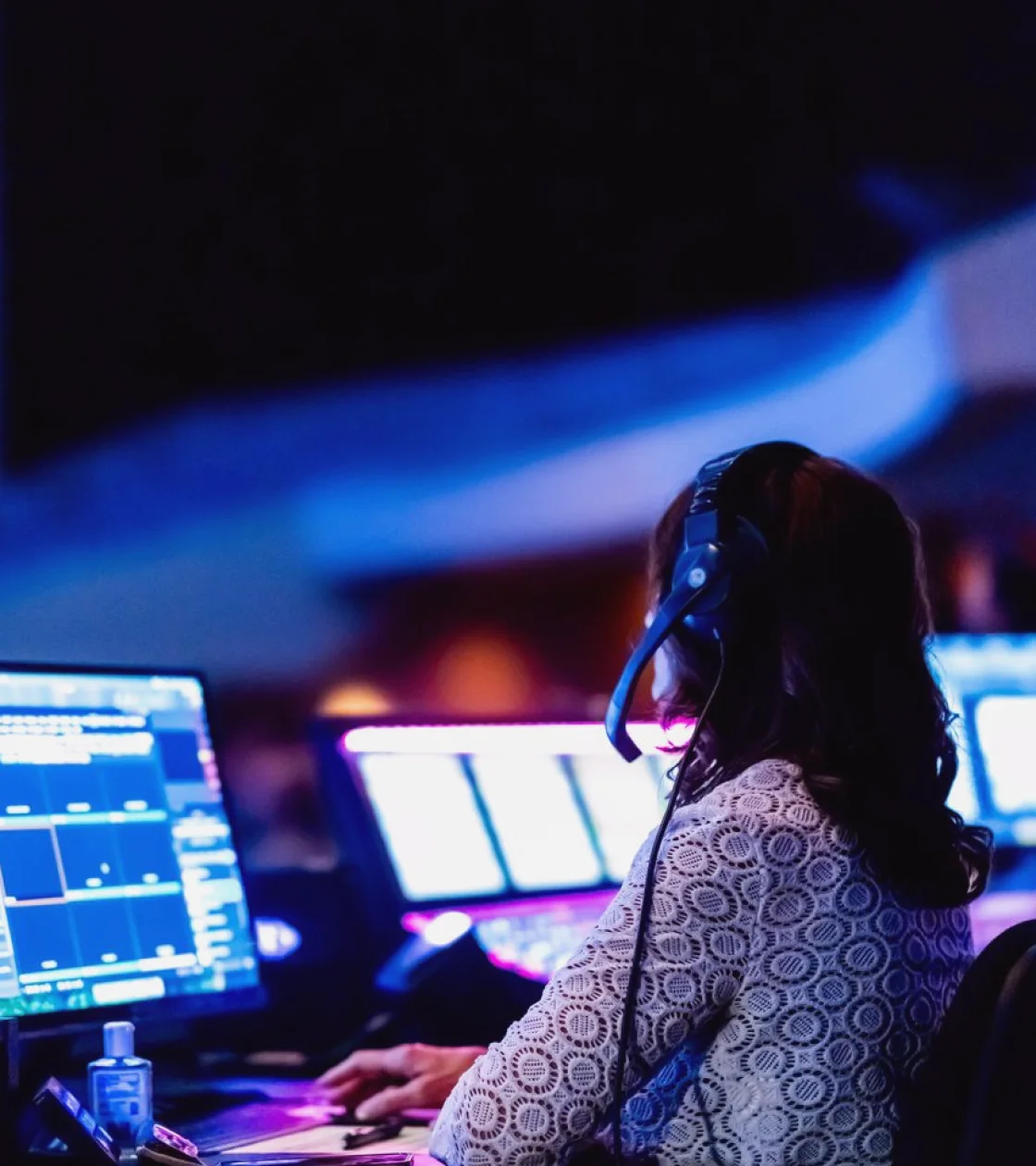
Almost every enquiry for a conference, concert or televised event begins the same way: what will your people actually be doing while the event runs? It is a fair question, because from the audience seats the work is invisible. If we do it well, nobody notices the crew at all.
The short answer is that a live event production crew turns a plan on paper into a sequence of cues that all the equipment and every operator can follow together. Cameras, sound, graphics, lighting and the stage manager all work from one shared timeline, and someone has to keep that timeline honest while the room is full and the clock is running.
In these mid autumn weeks we are busy with conferences and awards evenings, so I have answered this question many times recently. What follows is the version I give on the phone, written out properly, with the detail that rarely fits into a single conversation.
Before anyone touches a camera, we write the run-of-show with the organiser. It lists every segment in order: walk-in music, welcome, speakers, video playbacks, breaks, awards, closing remarks. Each line carries a duration, a named owner and the technical cues it needs, such as which microphone is live and which camera takes the wide shot.
This document is not a formality. When a speaker overruns or a guest arrives late, the run-of-show tells us what can be trimmed and what cannot. We agree those priorities in advance, so nobody argues about them with a hundred people waiting.
We also mark the points where things commonly go wrong: handovers between presenters, the first playback after a long speech, and the moment applause turns into a transition. Planning for those few minutes removes most of the stress from the rest of the programme.
On a typical event the control room has a small number of seats, each with a clear job. The director calls the shots and keeps the whole picture in mind. The vision mixer cuts between cameras on the director's call. The audio engineer balances voices, music and playback so that speech stays clean.
Camera operators work on the floor, each with an assigned position and a shot list. They talk to the director over intercom, so corrections happen in seconds rather than minutes. A stage manager links the production team to the people on stage and tells speakers when to start.
Smaller events combine some of these roles, and larger ones add graphics, replay or a second audio position. We size the crew to the run-of-show rather than to a standard template, because an extra seat that has nothing to do is cost without benefit.
The most useful hours we spend on any event happen before the audience arrives. A technical rehearsal lets every operator see the real room, the real lighting and the real speakers' positions. We walk through the openings and closings of each segment, because that is where cues cluster.
We also test the awkward items on purpose: a speaker who moves away from the lectern, a playback with its own audio, a microphone handed from person to person. Finding a loose cable or a dead radio mic at this stage costs a few minutes. Finding it during the keynote costs far more.
Where possible we run a short dress rehearsal with the actual presenters. Most people relax visibly once they have stood on the mark and heard themselves through the monitors, and that calm carries into the live broadcast.
Something small will go wrong at nearly every event: a battery runs low, a presenter skips a page, a video file refuses to play. The skill is not avoiding every fault but containing it so the audience never sees it.
Our approach is to keep a second option ready for each critical element. A spare microphone is already tuned. A backup playback source is loaded and waiting. The director knows which camera can cover a gap while the problem is fixed, and the intercom channel stays open so decisions are made in a sentence.
Calm matters more than speed here. A crew that talks in short, even phrases fixes things faster than one that reacts loudly. That tone is set in rehearsal, and it is something we deliberately practise with every team we coordinate.
Organisers often ask what they can do to help us. The most valuable thing is an early, honest outline of the programme, even if some details are still moving. We would rather revise a draft run-of-show three times than start from nothing a week before the event.
Please also tell us who your speakers are and whether any are nervous in front of cameras, which materials will be played back and in what format, and who on your side has authority to make a call during the event. One decision-maker in the room saves a surprising amount of time.
Access to the venue for setup and rehearsal is the other essential. A longer window before doors open is almost always better value than extra equipment on the day.
A live event crew does one thing above all: it keeps a shared plan moving while the room changes around it. The run-of-show, the rehearsal and a calm control room do most of the work long before the first guest sits down. If you are planning an event and want to talk through how it would run, contact us with a rough outline and we will take it from there.
Keep reading
Audio Engineering: A Checklist Before You Decide on Your Sound Plan
Before you commit to an audio plan for a programme or live event, these are the questions worth settling: sources, monitoring, rehearsal time and who owns the mix on transmission day.
Behind the Lighting Plan: How a Studio Set Gets Lit
A lighting director walks through the working day behind a studio plan: the walk-through, the rig, the camera checks and the small adjustments that keep a presenter looking the same all show.
How We Now Plan Multi-Camera Studio Systems From the Control Room Outwards
A look at how studio camera system planning at videlyzo now starts from the gallery and the people in it, and what that changes for producers booking a presenter-led show.